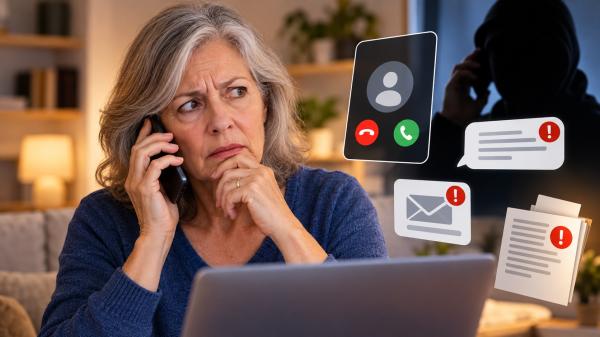
An unexpected phone call claims your Social Security number is linked to a crime. A text message warns that your benefits will stop unless you act immediately. An email appears to come from a government office and asks you to confirm personal information.
These messages can sound convincing, especially when they involve retirement benefits or your financial security. However, a familiar name, official-looking document, or local phone number does not prove a message is legitimate.
Learning how to recognize a Social Security scam can help you protect your identity, avoid financial losses, and respond with confidence. The key is to recognize the warning signs and verify unexpected claims through official channels.
What Is a Social Security Scam?
A Social Security scam occurs when someone impersonates the Social Security Administration (SSA) or another government representative to deceive people.
Scammers may try to obtain your Social Security number, banking information, passwords, or money. They may also use stolen personal information to commit identity theft.
These schemes can arrive through several channels:
- Phone calls and voicemail messages
- Text messages and emails
- Letters or other documents
- Fake government websites
- Social media messages
Some scammers threaten people with legal consequences. Others promise increased benefits, help with an application, or a refund. Their approaches differ, but the goal is usually to obtain money or sensitive information.
6 Warning Signs of a Social Security Scam
Recognizing common warning signs can help you identify suspicious contact before responding.
1. Someone Threatens to Suspend Your Benefits
A caller may claim your Social Security number has been suspended or connected to criminal activity. They might threaten arrest, legal action, or the loss of your benefits.
These threats are designed to create fear and discourage you from checking the facts.
What to remember: The SSA does not suspend a person’s Social Security number. A threat involving arrest or immediate punishment over the phone is a serious warning sign.
Do not provide personal information simply because someone claims to represent a government agency.
2. You Are Pressured to Act Immediately
Scammers often insist that you must respond within minutes or risk losing your benefits.
They may tell you to follow a link, provide a verification code, or make a payment before a supposed deadline expires.
Legitimate administrative matters may involve deadlines, but pressure from an unexpected caller is not proof that a request is genuine.
Take time to verify the claim independently. A legitimate issue should be checked through official channels, not through instructions supplied by a suspicious contact.
3. Someone Demands Money Through Unusual Payment Methods
A caller may claim you owe a fine, must pay a fee to restore benefits, or need to transfer money to protect your Social Security account.
They may request payment through gift cards, cryptocurrency, wire transfers, cash, or payment apps.
These methods can make it difficult to recover the money.
The SSA will not demand gift cards, cryptocurrency, or cash transfers to resolve a supposed problem with your Social Security number. Treat such demands as a strong indication of fraud.
Never send money simply because an unexpected caller claims it is necessary to protect your benefits.
4. You Are Asked for Sensitive Personal Information
Some scammers ask for your Social Security number, bank account details, passwords, or one-time security codes.
They may claim they need this information to verify your identity or prevent your benefits from being interrupted.
Government agencies may legitimately request information in certain situations. The concern is an unexpected request that you cannot independently verify.
Do not share sensitive information with an unsolicited caller, texter, or email sender. Contact the agency using a trusted, independently verified channel before proceeding.
5. A Message Contains Suspicious Links or Attachments
A fraudulent email or text may look professional and use familiar government terminology. It may include a logo, a case number, or a link to a website that resembles an official page.
Clicking the link could lead to a fake sign-in page or expose your device to harmful software.
Look for unusual web addresses, unexpected attachments, spelling errors, and requests for information that seem unnecessary. However, a message can be fraudulent even when its writing looks polished.
Instead of clicking a link, type ssa.gov into your browser or use a trusted bookmark to reach the official Social Security website.
6. The Caller ID or Documents Look Official
A phone call may display a government agency’s name or a familiar telephone number. A letter may contain official-looking formatting, and an email may appear to come from a legitimate address.
Scammers can manipulate caller ID and imitate official communications.
Do not rely on the displayed number, the caller’s claimed job title, or the appearance of a document to establish authenticity.
End a suspicious call and contact the agency independently. Do not use a phone number or link provided by the person you suspect may be impersonating an official.
How to Verify Whether a Social Security Message Is Real
If a message concerns your benefits or personal information, take these steps before responding.
1. Pause before acting. Do not let a threatening call or urgent message rush your decision.
2. End suspicious contact. Hang up or stop replying. Avoid clicking links or opening unexpected attachments.
3. Visit the official website independently. Type ssa.gov into your browser rather than using a link in the message.
4. Check through a trusted channel. Use contact information published on the official SSA website to ask whether the issue is genuine.
5. Talk to someone you trust. If a caller is pressuring you to move money or keep the conversation secret, seek a second opinion before doing anything.
The SSA and its Office of the Inspector General provide official information about Social Security-related scams and reporting options. The Federal Trade Commission (FTC) also recommends contacting government agencies through independently verified information rather than trusting unexpected callers.
Remember that scammers may know some of your personal information. They may even use the name of a real government employee. These details do not establish that the contact is legitimate.
What to Do If You Receive a Social Security Scam
Your response depends on what happened. You can take useful steps even if you are unsure whether the scammer obtained anything.
If You Only Received a Suspicious Message
Do not reply, click links, download attachments, or call the number provided. Save the message if you want to report it, then block the sender when appropriate.
You do not need to engage with the person to determine whether the message is fraudulent.
If You Shared Personal Information
If you disclosed your Social Security number, account credentials, or other sensitive details, take action promptly.
- Change compromised passwords and secure any affected online accounts.
- Contact your bank or financial institution if you shared banking details or suspect unauthorized transactions.
- Review financial statements and account activity for unfamiliar transactions.
- Visit IdentityTheft.gov for guidance on responding to identity theft.
- Consider reviewing your credit reports and taking appropriate steps to protect your credit if your identity may have been compromised.
If you shared a one-time verification code or account password, secure the affected account immediately using its official website or app.
If You Sent Money
Contact the bank, payment service, wire-transfer company, or gift card issuer immediately. Explain that the payment may be connected to fraud and ask whether it can be stopped or reversed.
Recovery is not guaranteed, but acting quickly may help.
Keep copies of messages, receipts, transaction details, and other relevant records. These may help when reporting the incident or contacting your financial institution.
Most importantly, do not blame yourself. Scammers often use sophisticated impersonation tactics and calculated pressure. Responding quickly to protect yourself matters more than feeling embarrassed about what happened.
Where to Report a Social Security Scam
Reporting suspected fraud can help authorities identify patterns and investigate criminal activity.
- Social Security Administration Office of the Inspector General: Visit the official Social Security scam reporting page to report suspected impersonation scams.
- Federal Trade Commission: Use ReportFraud.ftc.gov to report government impersonation and other fraud.
- IdentityTheft.gov: Use this resource if someone has misused your personal information or you suspect identity theft.
These services have different purposes. The SSA Office of the Inspector General handles Social Security-related reports, while the FTC collects reports about fraud and deceptive practices. IdentityTheft.gov provides recovery guidance for identity theft.
You do not need to prove that a crime occurred before reporting a suspicious contact. Describe what happened and provide any relevant evidence you have.
The Safest Rule to Remember
A message that mentions your Social Security benefits is not automatically legitimate. Scammers can imitate government employees, create convincing documents, and make false claims sound urgent.
When something feels suspicious, stop and verify it independently. Never send money or disclose sensitive information just because an unexpected caller claims to represent the government.
A few minutes spent checking a claim can help protect your identity, your savings, and your peace of mind.
- What Is a Social Security Scam?
- 6 Warning Signs of a Social Security Scam
- 1. Someone Threatens to Suspend Your Benefits
- 2. You Are Pressured to Act Immediately
- 3. Someone Demands Money Through Unusual Payment Methods
- 4. You Are Asked for Sensitive Personal Information
- 5. A Message Contains Suspicious Links or Attachments
- 6. The Caller ID or Documents Look Official
- How to Verify Whether a Social Security Message Is Real
- What to Do If You Receive a Social Security Scam
- If You Only Received a Suspicious Message
- If You Shared Personal Information
- If You Sent Money
- Where to Report a Social Security Scam
- The Safest Rule to Remember