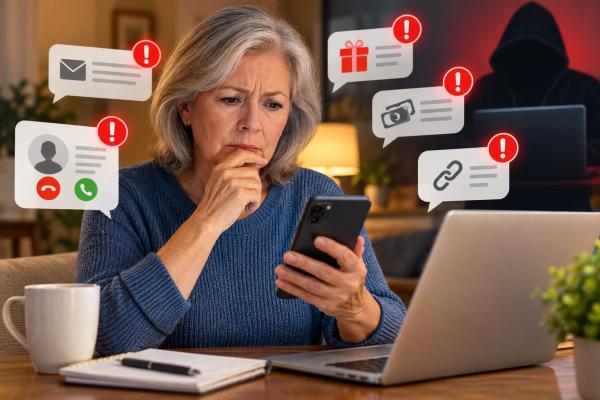
A scam does not always look like a scam.
It may arrive as a text message that appears to come from your bank, an email about a package you are expecting, or a phone call from someone claiming to represent a government agency. Sometimes the message looks professional and uses information that makes the story seem believable.
That is why knowing a few common warning signs can be more useful than trying to memorize every scam.
The goal is simple: recognize when something feels wrong, slow down, and verify before you give anyone your money or personal information.
The First Rule: Stop Before You Respond
Scammers often want you to make a decision before you have time to think.
They may tell you that your account has a problem, that you owe money, that you have won something, or that a loved one is in trouble. The details can change, but the pressure is often the same: act now.
The Federal Trade Commission advises consumers to resist pressure to act immediately. If someone is rushing you to pay or provide personal information, that is a major warning sign.
When an unexpected message or call creates a sense of panic, take a pause.
You can hang up. You can close the message. You can wait before responding.
A few minutes spent checking the story could save you from a much bigger problem.
8 Warning Signs of a Scam
1. Someone contacts you unexpectedly
An unexpected call, text, email or social media message deserves extra attention when it asks for money, personal information or access to an account.
The FTC recommends not responding to unexpected requests for sensitive information. Instead, contact the person or organization independently using information you already know is legitimate.
2. They create a sense of urgency
“Act now” is one of the oldest scam tactics, but it remains effective because urgency can interfere with good judgment.
A caller may say your account will be closed today. A message may claim you have only minutes to resolve a problem. Someone pretending to be a relative may say they need money immediately.
Pressure is a reason to stop, not a reason to hurry.
3. They ask for sensitive information
Be cautious when someone unexpectedly asks for information such as your Social Security number, bank account details, credit card information, passwords or security codes.
Even if the person knows your name or other details about you, that does not prove the request is legitimate.
Do not assume that a caller is trustworthy simply because they sound professional or know something about you.
4. They tell you exactly how to pay
Payment instructions can be one of the clearest warning signs.
The FTC warns consumers to be especially cautious when someone unexpectedly insists on payment through methods such as cryptocurrency, wire transfers, gift cards, cash or certain payment apps.
If someone says you must use a particular unusual payment method or the transaction cannot happen, stop and verify the situation independently.
5. They send you a link and want you to click it
A message can look as though it came from a company you recognize and still be fraudulent.
If you receive an unexpected message about an account, payment or security problem, avoid clicking the link simply because the message looks official. Instead, go directly to the organization’s known website or use a phone number you obtained independently.
The same principle applies to attachments. If you were not expecting a document, do not open it simply because the sender claims it is important.
6. They claim to represent an organization you know
Scammers frequently impersonate businesses and government agencies.
The FTC notes that scammers may pretend to represent organizations such as the IRS, Social Security Administration, Medicare or other familiar institutions. Caller ID is not proof that the person is who they claim to be because scammers can manipulate the information displayed on your phone.
If someone claims to represent an organization, verify the claim independently.
Do not use the phone number or website address supplied by the suspicious caller or message.
7. They tell you to keep it secret
Secrecy can be another warning sign.
A scammer may tell you not to discuss the situation with your spouse, family member, bank employee or anyone else. The purpose is often to prevent someone from giving you a second opinion.
If a situation feels confusing or frightening, talk to someone you trust before taking action.
The FTC specifically recommends talking with someone you trust when you suspect a scam.
8. The story sounds too good — or too frightening — to be true
Scams can use either excitement or fear.
You might supposedly have won a prize you never entered to win. You might be offered an unexpected financial opportunity. Or you might be told that something terrible will happen unless you pay immediately.
Different emotions, same basic strategy: get you to react instead of verify.
When the stakes suddenly seem unusually high, slow down.
How to Verify Before You Trust the Message
Verification is one of the strongest defenses against fraud.
Suppose you receive a message saying there is a problem with your bank account. Rather than clicking the link in the message, open your bank’s website using the address you normally use or contact the bank through a trusted phone number.
If someone calls claiming to be from a government agency, end the call and find the agency’s official contact information independently.
If a friend or relative supposedly needs money urgently, contact them through another method you already use. A familiar name or profile picture is not enough to establish that the message is genuine.
The key is to verify the story separately from the person telling it.
What to Do If You Already Responded
If you have already clicked a link, shared information or sent money, don’t let embarrassment keep you from acting.
Start by stopping further communication with the suspected scammer. Do not send additional money simply because they promise that another payment will solve the problem.
If money was sent, contact the company or financial institution you used to make the payment as soon as possible and ask what options are available. The FTC recommends contacting the payment company promptly after a scam.
If you shared passwords or account credentials, change them. If your identity information was misused, IdentityTheft.gov provides a recovery plan and steps for reporting identity theft.
Keep copies of suspicious messages, emails, phone numbers, receipts and other records. They may be useful when reporting what happened.
Most importantly, don’t assume that being deceived means you were careless. Scammers deliberately use pressure, impersonation and convincing stories to manipulate people.
Where to Report a Scam
For scams in the United States, the Federal Trade Commission accepts reports through ReportFraud.ftc.gov. Reports can help the FTC identify patterns and support investigations.
If you believe you are dealing with identity theft, IdentityTheft.gov provides federal guidance and a personalized recovery plan.
For online or internet-enabled crimes, the FBI directs victims to report them to the Internet Crime Complaint Center, or IC3. The FBI notes that prompt reporting can support investigations and may help with recovery of lost funds.
The appropriate reporting option can depend on what happened, so use the official resource that matches the situation.
A Simple Habit That Can Keep You Safer
You do not have to become an expert on every new scam.
Instead, remember four steps:
Stop. Question. Verify. Act.
Stop when an unexpected request creates pressure.
Question why someone needs your money or information.
Verify the situation using contact information you find independently.
Then act only when you are confident the request is legitimate.
A convincing message can make a scam difficult to recognize in the moment. But you can give yourself an advantage by refusing to let someone else control the pace of your decision.
When something feels urgent, taking a moment to verify may be the most important thing you do.
- The First Rule: Stop Before You Respond
- 8 Warning Signs of a Scam
- 1. Someone contacts you unexpectedly
- 2. They create a sense of urgency
- 3. They ask for sensitive information
- 4. They tell you exactly how to pay
- 5. They send you a link and want you to click it
- 6. They claim to represent an organization you know
- 7. They tell you to keep it secret
- 8. The story sounds too good — or too frightening — to be true
- How to Verify Before You Trust the Message
- What to Do If You Already Responded
- Where to Report a Scam
- A Simple Habit That Can Keep You Safer