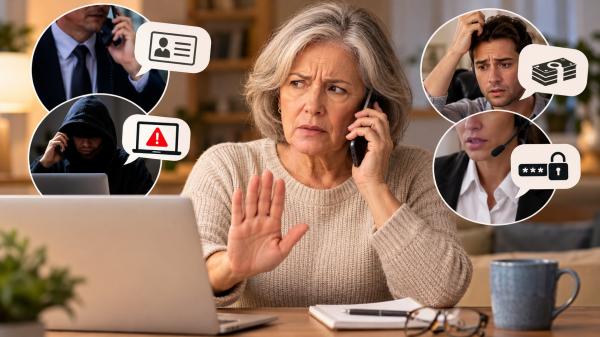
A phone call says your bank account is at risk. A text claims to come from a government agency. Someone posing as a family member says they need money immediately.
These situations can feel convincing, especially when the person contacting you sounds professional or knows personal details about your life. But a familiar name, official-looking message, or urgent story does not prove someone’s identity.
An impostor scam happens when someone pretends to be a person or organization you trust to obtain money or personal information. Learning to recognize the warning signs can help you pause, verify the facts, and avoid a costly mistake.
What Is an Impostor Scam?
An impostor scam occurs when a fraudster pretends to represent a legitimate person, business, or organization. The goal is usually to convince you to send money, reveal sensitive information, or provide access to an account or device.
These scams can arrive through phone calls, text messages, emails, social media, or online conversations.
Common examples include:
- Government impersonation: Someone claims to represent the IRS, Social Security Administration, Medicare, or another government agency.
- Bank and business impersonation: A caller claims there is a problem with your account or an unusual transaction.
- Family emergency scams: Someone pretends to be a relative who needs money urgently.
- Tech support scams: A person claims your computer has a security problem and offers to fix it.
- Online relationship scams: Someone you have met online invents an emergency or requests financial help.
The details vary, but the underlying tactic is the same: the scammer uses a false identity to gain your trust.
6 Warning Signs of an Impostor Scam
Recognizing these patterns can help you identify suspicious contact before responding.
1. The Person Claims There Is an Emergency
Scammers may tell you that a relative has been arrested, your bank account has been compromised, or you face a serious government penalty.
They want you to feel that immediate action is necessary.
For example, someone claiming to be your grandchild might say they need money for an unexpected emergency. The story may sound plausible, but that does not make it true.
What to do: Contact the relative directly using a number you already know. If the caller claims to represent an organization, verify the situation through its official contact channels.
2. They Pressure You to Act Immediately
Urgency is a common warning sign. A caller might insist that you must pay today, risk losing access to an account, or face legal consequences if you hang up.
This pressure is designed to prevent you from checking the facts.
Legitimate problems can require prompt attention, but you should still be able to verify who is contacting you.
What to do: End the conversation if necessary. Take time to investigate the claim before making a payment or sharing information.
3. They Demand Unusual Payment Methods
Requests for gift cards, cryptocurrency, wire transfers, or cash delivered to someone are serious warning signs.
Scammers favor these methods because recovering the money can be difficult. They may also tell you to withdraw funds or move money to a different account to keep it safe.
The Federal Trade Commission warns that legitimate government agencies will not demand that you transfer money to protect it from fraud.
What to do: Do not send money under these conditions. Contact your bank or the organization independently to verify the claim.
4. The Caller ID or Message Looks Official
A call may display a familiar business name or a government office’s phone number. An email may include a logo, professional formatting, or language that sounds official.
Unfortunately, scammers can manipulate caller ID and copy the appearance of legitimate communications.
A convincing message is not proof that it came from the organization it names.
What to do: Do not rely on the displayed number, email address, logo, or signature alone. Find the organization’s contact information independently and ask whether the communication is genuine.
5. They Ask for Sensitive Information
An unexpected caller might request your Social Security number, bank details, password, or a verification code sent to your phone.
Some impostors also ask for remote access to your computer, claiming they need to resolve a security problem.
These requests can expose your accounts and identity to misuse.
What to do: Do not disclose sensitive information in response to an unexpected request. Contact the organization through a trusted channel if you believe the request might be legitimate.
6. They Tell You to Keep the Situation Secret
A scammer may insist that you cannot tell your family, bank, or anyone else about the situation.
This tactic can isolate you from people who might recognize the warning signs.
Family emergency scams, in particular, may involve claims that revealing the situation will make things worse for the relative involved.
What to do: Speak with someone you trust before acting. An independent perspective can help you evaluate the story without pressure.
How to Verify Whether a Call or Message Is Real
If you receive an unexpected request for money or personal information, follow these steps before responding.
- Pause the conversation. You do not have to make a decision while someone is pressuring you.
- Avoid links and attachments. Do not click links or open unexpected attachments in suspicious messages.
- Find the official contact information yourself. Visit a website you know is genuine or use a trusted phone number. Do not rely on contact details supplied by the suspicious caller.
- Verify family emergencies independently. Call the relative directly or contact another family member who can confirm the story.
- Check with your bank if money is involved. Use the number on your bank card or an independently verified official website.
- Talk to someone you trust. A friend or family member may notice inconsistencies that are difficult to recognize under pressure.
The FTC recommends independently contacting the person or organization involved rather than trusting an unexpected message.
Remember that a legitimate-looking message can still be fraudulent. Verification is more reliable than appearance.
What to Do If You Have Already Responded
If you have shared information or sent money to someone you now suspect is an impostor, act promptly. You do not need to wait until you know the full extent of the problem.
If You Sent Money
Contact your bank, credit card company, payment app, or other payment provider immediately. Explain what happened and ask whether the transaction can be stopped, reversed, or disputed.
Recovery is not guaranteed, but acting quickly may help limit further losses.
If you paid using a gift card, contact the card issuer and ask whether the funds can be recovered. If you used cryptocurrency, contact the platform involved and report the transaction.
If You Shared Account Information
Change compromised passwords and secure affected accounts. If you reused the same password elsewhere, update those accounts too.
Contact the relevant financial institution if you shared banking information or suspect unauthorized account access. Ask about freezing or closing affected accounts when appropriate.
If You Shared Personal Identity Information
If someone obtained your Social Security number or other identifying details, visit IdentityTheft.gov.
The official website provides recovery steps based on the type of identity theft involved. Depending on your situation, you may need to contact companies, secure accounts, and review your credit reports.
Keep Records of What Happened
Save suspicious messages, emails, receipts, transaction details, and other relevant evidence. Write down the dates and contact information associated with the incident.
These records may help when reporting the scam or working with your bank.
Most importantly, do not blame yourself. Impostors often use convincing stories and deliberate pressure. Focus on protecting your information and limiting any further damage.
Where to Report an Impostor Scam
In the United States, you can report suspected impostor scams to the Federal Trade Commission (FTC).
- Report fraud: Visit ReportFraud.ftc.gov.
- Report identity theft: Visit IdentityTheft.gov for recovery guidance.
- Report financial account fraud: Contact the affected bank or payment provider directly.
- Report other criminal activity: Depending on the circumstances, you may also contact local law enforcement.
You can report a suspected scam even if you did not lose money. Reports help the FTC identify patterns and inform its enforcement and consumer education work.
A Simple Rule to Remember
An unexpected call, message, or request for money deserves independent verification, even when it appears to come from someone you know.
You do not need to respond immediately. You can hang up, check the facts, and ask for help before making a decision.
Pause, verify, and then decide. That simple habit can help protect your money, your personal information, and your peace of mind.
- What Is an Impostor Scam?
- 6 Warning Signs of an Impostor Scam
- 1. The Person Claims There Is an Emergency
- 2. They Pressure You to Act Immediately
- 3. They Demand Unusual Payment Methods
- 4. The Caller ID or Message Looks Official
- 5. They Ask for Sensitive Information
- 6. They Tell You to Keep the Situation Secret
- How to Verify Whether a Call or Message Is Real
- What to Do If You Have Already Responded
- If You Sent Money
- If You Shared Account Information
- If You Shared Personal Identity Information
- Keep Records of What Happened
- Where to Report an Impostor Scam
- A Simple Rule to Remember