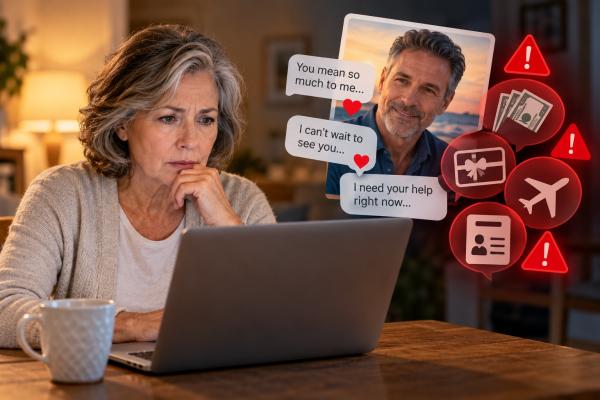
A new online relationship can feel exciting. You may find yourself talking every day, sharing personal stories, and feeling that you have finally met someone who understands you.
But sometimes, the person on the other side of the screen is not who they claim to be.
Romance scammers create fake identities and build emotional connections with people they meet online. Once trust has been established, they may ask for money, personal information, or help with a financial transaction.
Knowing the warning signs can help you slow things down before a promising connection becomes a costly mistake.
What Is a Romance Scam?
A romance scam happens when someone creates or uses a false identity to develop a romantic or close relationship with another person for financial or other personal gain.
These scams can begin on dating apps, social media, messaging platforms, or other online communities. The person may appear attentive, affectionate, successful, and genuinely interested in getting to know you.
The FBI notes that romance scammers can appear convincing and caring while gradually building trust.
The goal is not always an immediate request for money. The scammer may spend weeks or months developing the relationship first.
That is why recognizing patterns matters more than judging a single conversation.
Warning Signs of a Romance Scam
1. The relationship becomes intense very quickly
Someone you have just met may begin talking about love, commitment, or a future together surprisingly soon.
Strong feelings can develop naturally, but an unusually fast pace deserves some caution, especially when the person seems to know exactly what to say to make you feel emotionally connected.
Romance scammers often try to establish trust quickly.
2. They always have a reason they cannot meet
One of the clearest warning signs is a person who repeatedly promises to meet but always has a new reason why it cannot happen.
They may say they are working overseas, traveling, serving in the military, or dealing with another situation that prevents an in-person meeting.
A legitimate person may occasionally have scheduling problems. The concern is a continuing pattern of excuses combined with growing emotional demands. The FTC and FBI both identify an inability or repeated refusal to meet in person as an important warning sign.
3. They want to move the conversation somewhere else
A person may quickly ask you to leave a dating site or social platform and communicate privately by text, email, or another messaging service.
Moving a conversation elsewhere is not proof of fraud by itself. But when it happens very early and is combined with other warning signs, it is worth slowing down.
The FBI specifically advises caution when someone quickly tries to move communication away from the platform where you met.
4. They ask for money
This is one of the strongest warning signs.
The request may involve an emergency, medical expense, travel problem, legal issue, unpaid bill, or another personal crisis. A person may also ask for help buying a ticket to finally visit you.
The FTC advises never sending money or gifts to a romantic interest you have not met in person.
Be particularly cautious if someone tells you how to send the money using cryptocurrency, gift cards, wire transfers, or a payment app. These methods can make it difficult to recover funds.
5. They encourage you to invest
Some romance scams eventually turn into investment fraud.
A new romantic interest may begin talking about cryptocurrency, trading, or a special investment opportunity. They may claim to have unusual financial knowledge and offer to help you make money.
The relationship is then used to make the investment opportunity seem trustworthy.
The FTC has specifically warned about romance scammers who persuade people to invest in cryptocurrency or other financial opportunities.
A romantic partner you have only met online should never be the person directing your financial decisions.
6. They try to isolate you
Pay attention if the person becomes uncomfortable when you talk to family members or friends about the relationship.
A scammer may suggest that other people do not understand your connection or that they are simply jealous or interfering.
Healthy relationships generally allow room for outside relationships and independent judgment. If someone is trying to make you distrust everyone who questions the relationship, take a step back.
The FBI identifies attempts to isolate someone from friends and family as a warning sign.
7. Their identity is difficult to verify
Look carefully at the person’s profile and the information they provide.
You can search for their name, occupation, or other publicly available details. You can also perform a reverse image search on profile photographs. If the same photograph appears under another name or in unrelated profiles, that is a significant warning sign.
Be aware that technology, including AI-generated content, can make fake identities harder to recognize. The FBI has warned that increasingly sophisticated technology can make fabricated material appear more convincing.
Verification should come from sources independent of what the person tells you.
8. They ask for sensitive personal information
Be careful if an online romantic interest asks for information such as your Social Security number, financial account details, passwords, or other identifying information.
The FBI also warns against sharing inappropriate personal images or financial information that could later be used for extortion.
A relationship does not automatically create a reason to share sensitive information.
How to Verify Someone Safely
You do not need to assume that every person you meet online is a scammer. Instead, give trust time to develop.
A few simple precautions can help:
- Slow the relationship down. Notice whether the person’s story remains consistent over time.
- Ask questions. Pay attention to whether answers make sense and match information provided previously.
- Search independently. Look for the person’s name, occupation, and publicly available information.
- Check profile photos. A reverse image search can reveal whether photographs appear under other names.
- Talk to someone you trust. A friend or family member may notice inconsistencies that are harder to see when you are emotionally involved.
- Protect your personal information. Do not share passwords, financial credentials, or sensitive identifying information.
- Never send money to someone you have only met online. This is one of the FBI’s clearest recommendations.
The goal is not to become suspicious of every new relationship. It is to give yourself enough time and independent information to make a decision.
What If They Ask for Money?
Stop and take a breath.
Do not let an emotional story create pressure to act immediately. You do not have to prove your affection by sending money.
Do not send cryptocurrency, gift cards, wire transfers, or other payments simply because someone you met online says there is an emergency.
If the person claims to need financial help to visit you, remember that a genuine relationship does not require you to send money to establish trust.
And if someone asks you to use your bank account to receive or transfer money on their behalf, do not agree. The FBI warns that this can involve other forms of theft or fraud.
What to Do If You Think It Is a Scam
If several warning signs are appearing, you do not need to keep investigating the person indefinitely.
Stop communicating with the suspected scammer. Do not continue sending money or personal information.
Keep relevant messages, photographs, payment records, usernames, and other evidence rather than deleting them. The FBI’s 2026 guidance specifically advises people who suspect a romance scam not to delete communications.
If you have already sent money, contact the financial institution or payment company involved as soon as possible and ask whether any action can be taken.
You can also report the scam to the FBI’s Internet Crime Complaint Center, or IC3, and report it to the FTC. The dating site or social media platform where you encountered the person should also be notified.
Being Scammed Does Not Mean You Were Foolish
Romance scams work because scammers deliberately build trust and emotional attachment. They may be patient, persuasive, and convincing.
Feeling embarrassed can make someone hesitate to tell family, friends, a financial institution, or law enforcement what happened. But keeping the situation private can make it harder to stop further losses.
If you suspect that someone you met online has been manipulating you, stepping away is not a failure. It is a protective decision.
The safest approach to online romance is simple: let trust develop slowly, verify what you can independently, and never send money to someone you have only met online.
- What Is a Romance Scam?
- Warning Signs of a Romance Scam
- 1. The relationship becomes intense very quickly
- 2. They always have a reason they cannot meet
- 3. They want to move the conversation somewhere else
- 4. They ask for money
- 5. They encourage you to invest
- 6. They try to isolate you
- 7. Their identity is difficult to verify
- 8. They ask for sensitive personal information
- How to Verify Someone Safely
- What If They Ask for Money?
- What to Do If You Think It Is a Scam
- Being Scammed Does Not Mean You Were Foolish